Wednesday, September 28, 2005

VALS Survey

The two categories to which I was assigned through the VALS survey were Experiencer(primary type) and Innovator(secondary). The experiencer description is listed as someone who is motivated by self-expression. He/She looks for new innovative ideas, experiences, fashions, and works the social ranks. The innovator is a highly-motivated person, an established leader, someone receptive to new ideas and technologies. At first I was not sure where this survey was headed, but after seeing the results and the diagram of categories listed, it made sense. I think the categories I was placed in would be the correct profile of myself.
In response to how I would change the survey if I were marketing a product to a group of college students, I don't know if I would necessarily take questions out, but I would definitely include questions in regards to technology and media habits. Sample questions would include: "How many different portable electronic/communication devices do you use daily?", "Understanding technology is essential to succeeding in school or the workplace - strongly agree, somewhat agree...etc.".

Wednesday, September 21, 2005

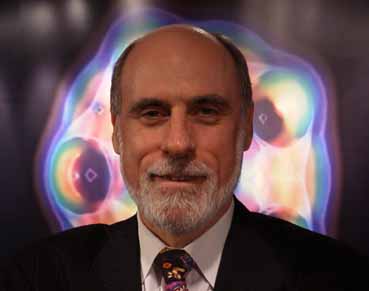
Extra Credit - Vint Cerf Defects to Google, Google Wins Again

Nearly two weeks ago, Vinton Cerf, one the internet's most important figures, resigned from MCI and announced he was taking a new job at the ever-dominating Google. Cerf starts at Google on October 3rd, working with the official title of "Chief Internet Evangelist". Cerf has described his move to Google as being a chance to work his "dream job". He also said that his work will be measured to what he can contribute today and in the future - he is not there because of what he has done in the past. I feel, as I am sure most others do, that this is a huge move for Google in structuring an organization unmatched by anyone else.

Google continues to attract new users with free programs on what seems like a weekly basis anymore (not really, but you get the point). I recently downloaded Google Earth, which then prompted my roommate to do the same. I have also been interested in Google Talk, but haven't used it mainly because I don't know anyone else using the service. Google is definitely my internet toolbox of choice. While I still have service from SBCYahoo, another joint endeavor I am happy with, I am curious to see how Google's plans for broadband/internet service turn out. I have also been reading about Google providing a wireless service. Google is forming an unstoppable force, but one that millions seem to approve of.

For more on this, read an article from wired.com

Wednesday, September 14, 2005

Website Assignment - Topic

For my website project, I have decided to take a look into the growing use of RFIDs (Radio Frequency Identification). One of part of my research (I plan on so far) will be to focus on some of the more common practices by corporations (and maybe even the private sector). This is just one of the many ways RFIDs tie into a class like T101, how we communicate with our products and how these products communicate back. I may make RFID uses two of my four content pages, and discuss how RFIDs have evolved into their current uses. I will also talk about how RFID is still evolving and what may happen in the future. Some of the current uses of RFIDs are already bordering on unethical grounds and the future remains uncertain. These future implications are part of the reason RFIDs are becoming so controversial.

Controversy is constantly associated with a technology like RFID, probably giving RFIDs some of the buzz and coverage it gets. This is an area I want to discuss more in-depth. I would like to find out who is for and who is against RFID technology/use, and to also see if the technology and use is actually as controversial as it seems. Will RFIDs impede on our basic privacies? Will RFID tags be used to collect information on citizens withour their knowledge? Some say this is already happening. What I hope to add to the RFID conversation is how these issues may be addressed in the future.

I have already conducted some basic research, with articles and stories coming from wired.com, wikipedia.org, among others. My research will become much more extensive in the next couple weeks, as I also hope to get an interview with a Social Informatics professor I had two years ago, Prof. Erik Bucy. His expertise on electronic device impact on society and culture will really enhance my work on this topic.